.avif)

Design meets function: A look behind the scenes of the Wave checkout counter
A checkout counter is often the last point of contact on the customer journey in brick-and-mortar retail. It is a functional but often overlooked element. But what if we rethink this moment? What if a purely practical piece of furniture becomes an architectural statement that underscores the brand identity and brings the shopping experience to a positive conclusion? This is precisely the challenge that the Kesseböhmer Ladenbau design team set itself. We spoke with Tom, Senior Retail Designer, and Gerda, Retail Designer, about their creative process, design philosophy, and the creation of the new Wave checkout counter.
The cash desk: More than just a piece of furniture
At first glance, a checkout counter appears robust, ergonomic, and technically reliable—purely functional furniture. But for the Kesseböhmer design team, it is precisely this complexity that holds creative appeal. Es to bridge the gap between functionality, brand identity, and a positive customer experience.
The creative challenge

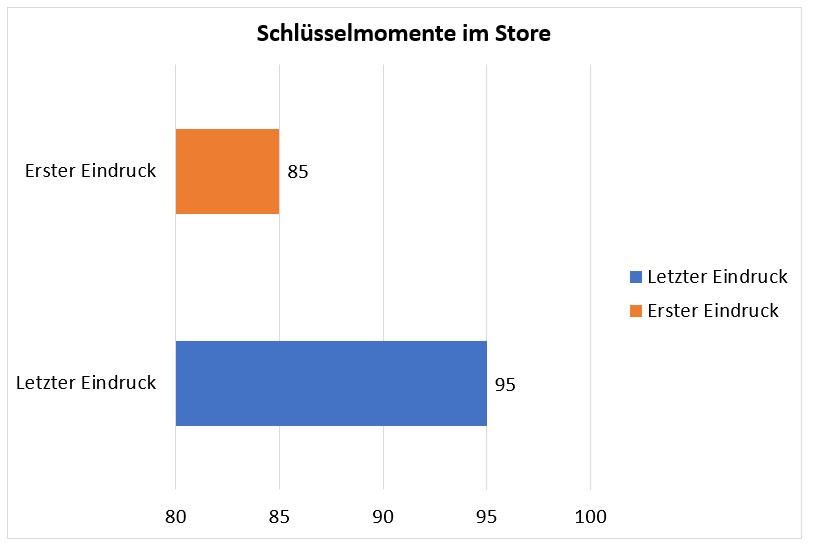
"The checkout counter is usually the first and last point of contact in the shopping experience," explains Gerda. This moment shapes the final impression that a customer takes away with them. The team therefore asked themselves: How can this moment be emotionally charged? The answer lies in conscious design.

Tom adds: "For us, creativity isn't just about 'making things beautiful', but about elegantly solving complex requirements." A checkout counter combines ergonomics for staff, technical integration, security aspects, and design. This complexity is what makes the object so exciting for designers. Es the art of turning a practical piece of furniture into a statement – a place that creates trust and makes the brand world tangible right to the end.
Our design philosophy: combining functionality brand identity in a holistic concept—through creative teamwork that shapes customer experiences and elegantly solves technical requirements. – Tom, Senior Retail Designer
The vision behind the Wave checkout counter
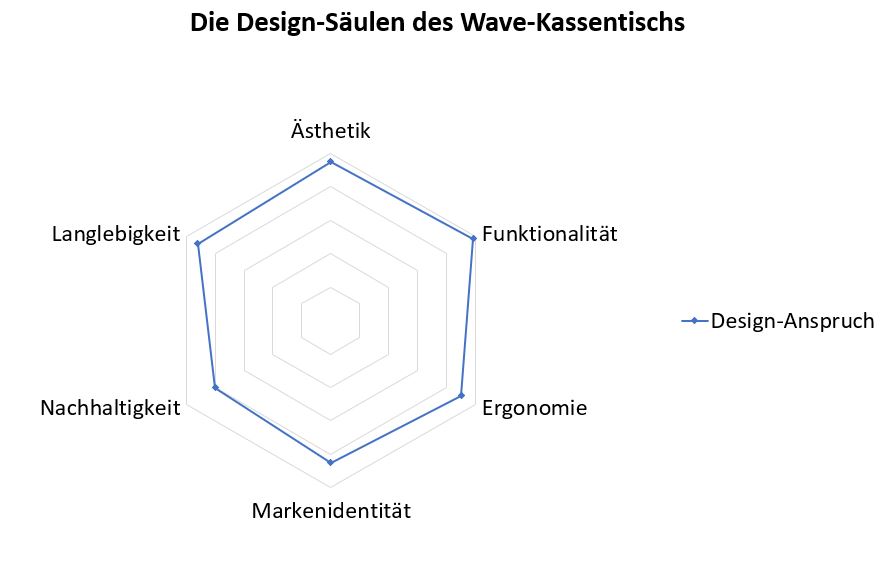
Every major project begins with a vision. With the Wave checkout counter, the team pursued a clear design concept that combined aesthetics and practicality from the outset.
A design concept with a dual focus
The development of the Wave checkout counter was driven by two central ideas. On the one hand, according to Tom, the table should table architectural statement in the store—with a clear, dynamic design language that combines stability and lightness. On the other hand, as Gerda emphasizes, the goal was to develop a universal, adaptable concept. The table be flexible enough to adapt to the respective brand identity, interior design, and specific shopping requirements in order to appeal to a broad target group.
The balance between aesthetics and everyday practicality
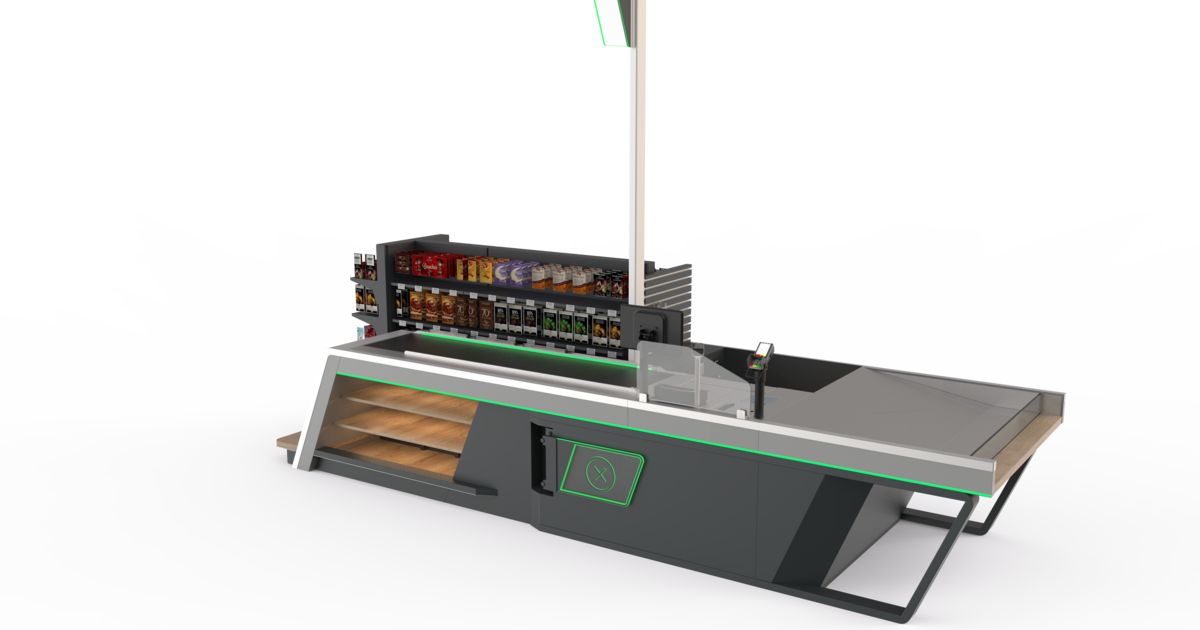
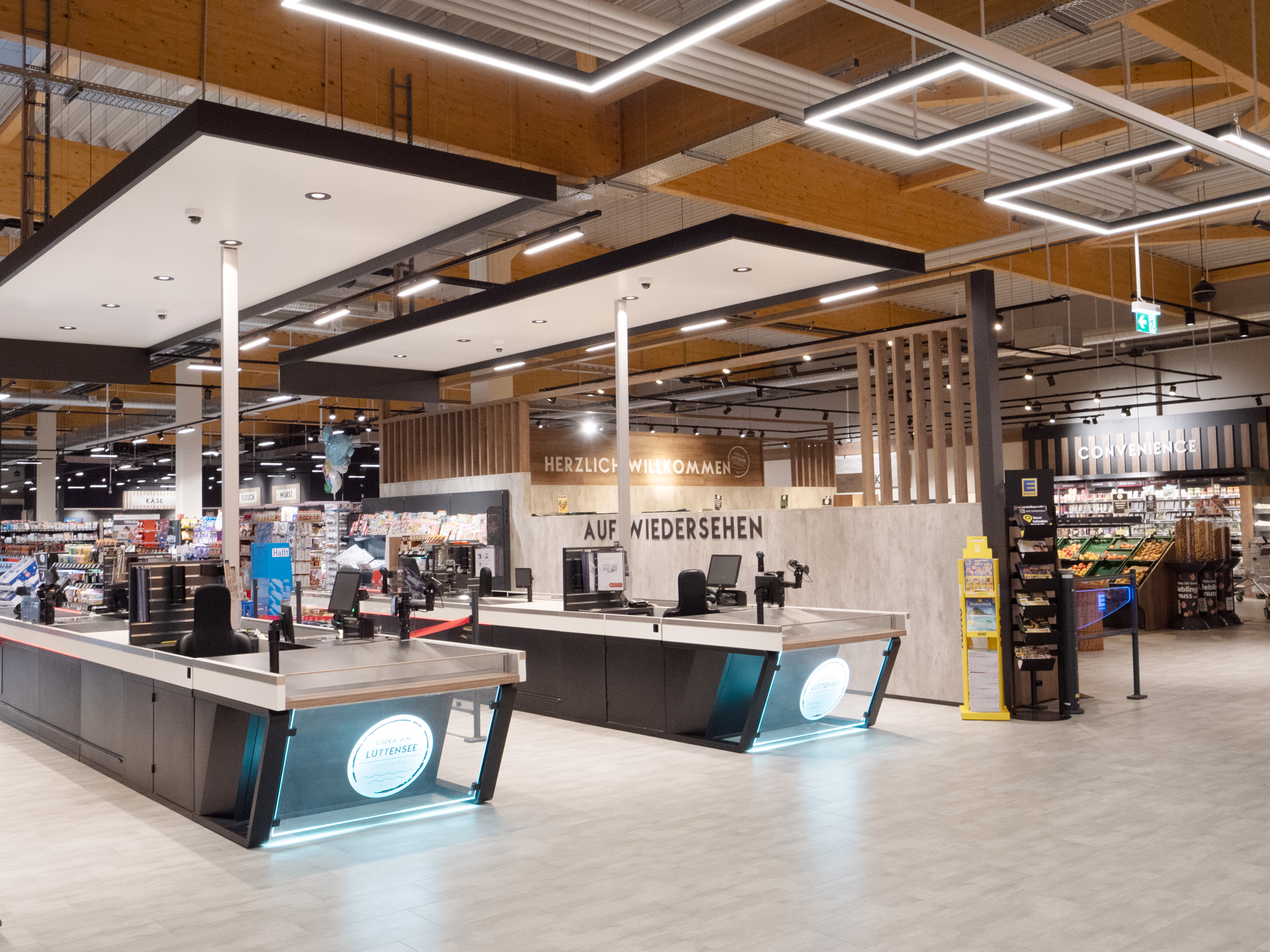
The biggest challenge was to reconcile the modern, minimalist lines with the tough demands of everyday use. The design team considered both aspects to be equally important. The aesthetics are defined by a dynamic shape, high-quality materials, and an integrated light line. At the same time, care was taken to ensure that all functional details—from ergonomics for staff and the integration of technical components to the robustness of the surfaces—were perfectly implemented. The result is a design that is not only aesthetically appealing, but also fully meets the demands of continuous daily use.
Materiality as a central element
The choice of materials played a decisive role. In an industrial context, es just about appearance, but also about feel, durability, and emotional impact. The team deliberately created contrasts: robust, technical-looking surfaces for stability and professionalism were combined with warm wood details that add a welcoming touch.
Gerda emphasizes the practical aspects: "The surfaces are subjected to heavy wear and tear from heavy and sharp objects in everyday use. To prevent scratches and dents, high-strength materials are used." Sharp edges have been consistently avoided and sensitive areas protected by plastic bumpers. At the same time, surfaces such as the bag rack have been deliberately designed to be warmer and more pleasant to the touch in order to create a positive experience. LED elements ensure long-distance visibility and quick orientation.
From concept to reality: the development process
A successful design does not emerge in a vacuum. The path from the initial draft to the finished product was characterized by user analyses, close cooperation with production, and a clear commitment to quality.
Focus on the user
The user perspective was central from the outset. To understand the workflows at the point of sale (POS), the team held discussions with sales staff, examined ergonomic requirements, and tested prototypes. "I looked at the processes directly on site in the store and asked both the checkout staff and customers about problems and important requirements," says Gerda, describing the process. Details such as the optimal working height, the arrangement of the technology, and freedom of movement were analyzed intensively in order to create a design that noticeably facilitates everyday work.
Production "Made in Germany"
The decision to produce the Wave checkout counter in Germany was crucial to the design process. The proximity to Kesseböhmer's own production facilities enabled close coordination between design and manufacturing. "We were able to work directly with the manufacturing teams, quickly test prototypes, and implement adjustments without having to travel long distances," says Tom. This close collaboration was essential for testing the industrial feasibility of design ideas and jointly finding solutions to complex challenges such as cable management and the integration of electronics.
Environmental considerations also played a role. The modular design allows individual components to be replaced, which extends the service life and reduces waste. Durable, resource-saving materials and short transport routes thanks to local production also contribute to a better environmental balance.
The future of the checkout area
The Wave checkout counter is not seen as a finished project, but rather as a platform for the future. The team is already considering further developments in order to respond to changing requirements in the retail sector.
Two main areas of focus are emerging:
•Modularity: The system is to become even more flexible so that it can be easily adapted to different store concepts using interchangeable modules.
•Digital integration: Future versions will seamlessly integrate technologies such as self-checkout solutions, mobile POS systems, and smart displays without compromising the clear design language.
"We observe how retail and customer behavior are changing and incorporate this into our design," explains Gerda. Es a continuous improvement process to holistically optimize the entire checkout area.
Personal reflections and hidden details
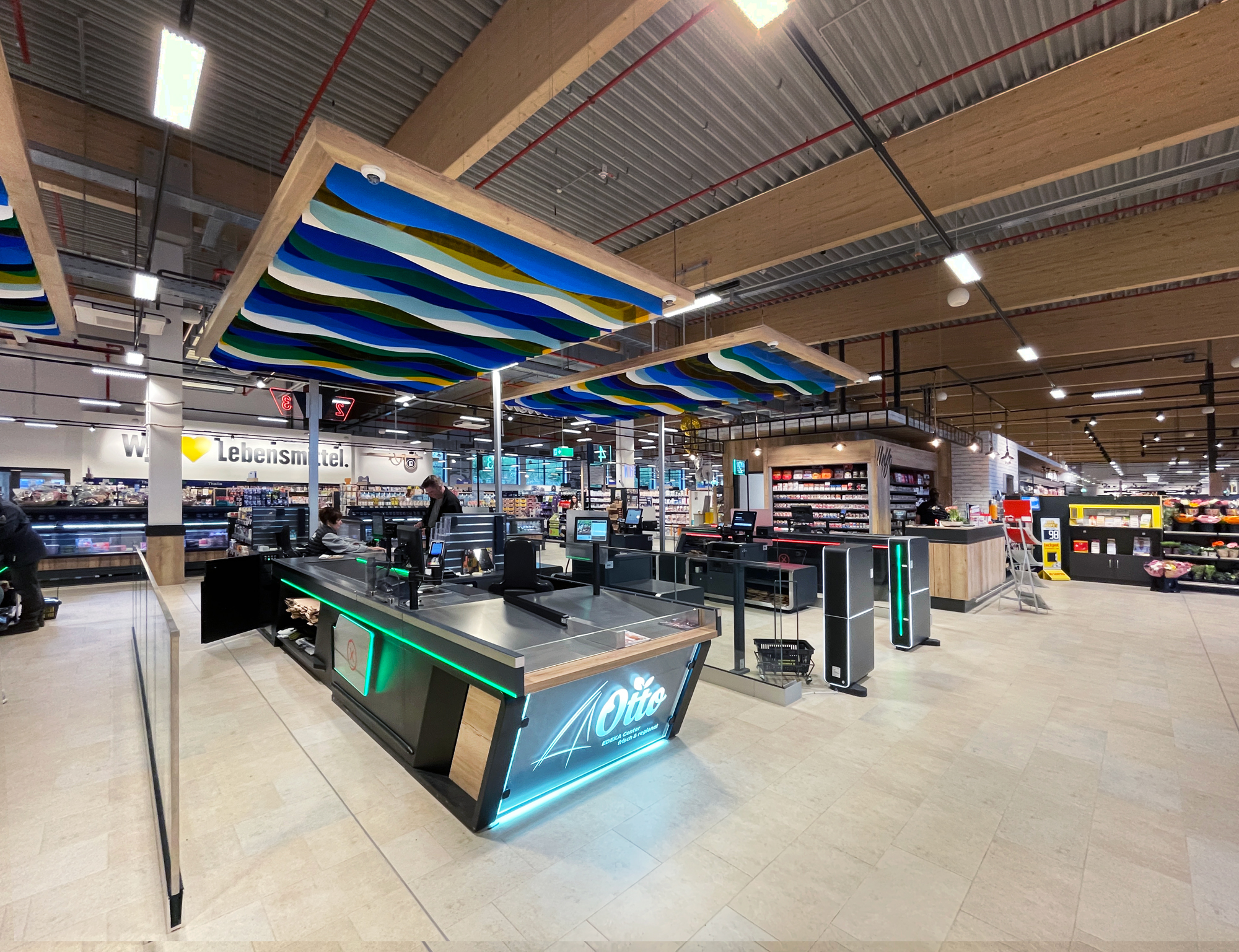
At the end of a long development process, es is es exciting to see the product in real-life use. For both designers, es is es special moment when drawings and prototypes become a functioning element in everyday market life. "Es nice to see the product in a real checkout environment after months of development," says Gerda happily.
When asked about a detail that is particularly close to their hearts, both respond with a similar thought. For Tom, es is es dynamics of the form: "The sloping lines and flowing geometry give the checkout counter a movement that elevates it beyond its purely functional role." Gerda highlights the continuous line that lends the table subtle elegance and creates visual harmony. Es these subtle effects, which may not be immediately noticeable, that shape the overall impression and make the Wave checkout counter more than just a place to pay.
Kesseböhmer WAVE checkout counter system
The checkout counter family covers a wide range of configurations—from compact self-checkout modules to ergonomically optimized workstations with clear operating logic. The combination is based on requirements, not standards.